Revision Rhinoplasty Beverly Hills & Los Angeles, CA

Discover the Transformative Benefits of Revision Rhinoplasty
Revision Rhinoplasty in Beverly Hills, CA, expertly performed by Dr. Swartout, offers a second chance to achieve your desired nasal appearance. It corrects previous nose surgery issues, enhances breathing, and aligns your nose aesthetically with your facial features.
What is Revision Rhinoplasty?
Revision rhinoplasty is a surgery performed to fix the results from a primary rhinoplasty. If you’ve had a nose job in the past and you’re no longer happy with the results, then a second surgery might be the right choice for you. To ensure that you get the best results possible from secondary nose surgery, it’s important to choose a board-certified plastic surgeon who has ample experience in nose procedures. Dr. Benjamin Swartout is one of the best revision rhinoplasty surgeons in the Beverly Hills / Los Angeles area for patients who had poor results from their first surgery.


Dr. Swartout is awesome! After having two failed rhinoplasty procedures, I was lucky to find Dr. Swartout. He completely fixed my nose and dramatically improved my breathing (which was never addressed in my previous surgeries). My nose also looks beautiful! I had given up on my nose ever being fixed, let alone looking normal. After my fist visit, I was convinced Dr. Swartout could help me. He is very friendly and patient and truly cares about each patient’s experience pre- and post-op. Because he took his time and was so careful, I had practically no swelling or bruising. Within a week my nose looked normal. I am so thankful for everything Dr. Swartout was able to do for me.




What is The Difference Between a Revision Rhinoplasty and an Initial Rhinoplasty?
An initial rhinoplasty, also known as a primary rhinoplasty, is the first surgery a patient undergoes to reshape their nose. It is typically done to address aesthetic concerns or improve nasal function for the first time.
On the other hand, a revision rhinoplasty is a secondary surgery performed to correct issues from a previous nose job. This procedure requires specialized skills and experience to navigate scar tissue, structural changes, and potential complications resulting from the initial surgery.
While an initial rhinoplasty focuses on creating the desired nasal appearance or improving breathing function for the first time, a revision rhinoplasty aims to correct any dissatisfaction or complications that arose from the primary procedure. The revision surgery is more complex due to alterations made during the initial operation and may require additional techniques to achieve optimal results.
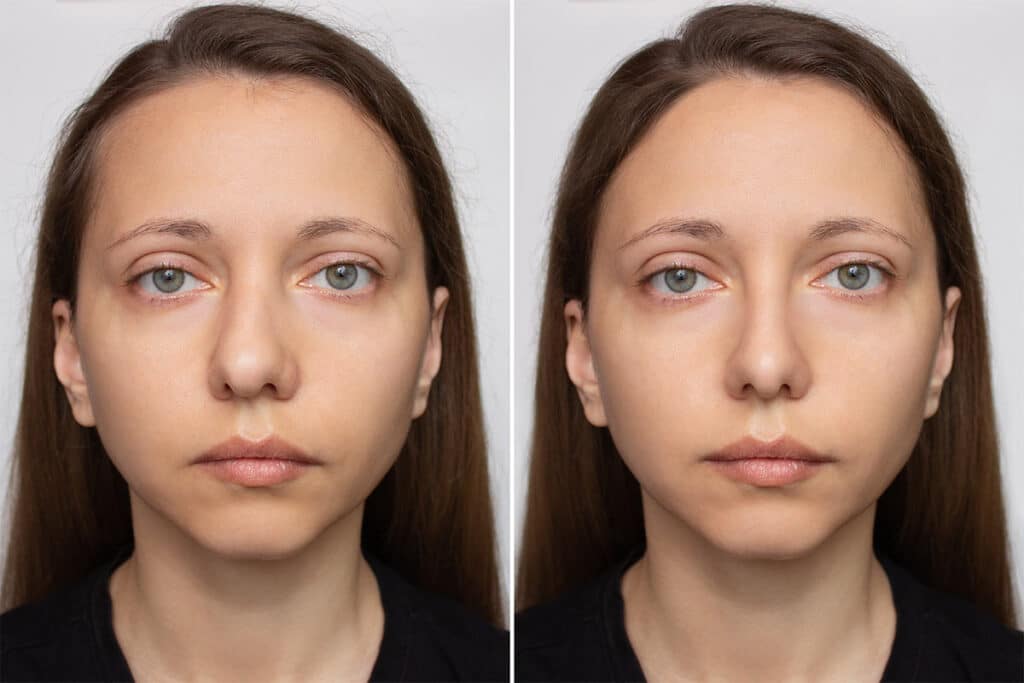
Trusting a skilled surgeon like Dr. Swartout for Revision Rhinoplasty in Beverly Hills ensures that your corrective procedure is performed with precision and expertise.
CONTACT US TODAY!
Call our Beverly Hills office, and we will be happy to help you.
Why Undergo a Secondary Nose Job?
Generally speaking, there are three main reasons patients may seek a second rhinoplasty.
One common reason is that the aesthetic or functional concerns the patient wished to address with their first nasal surgery were still unresolved after the final results became apparent. The surgery might not have produced the results the patient was expecting for a variety of reasons. This includes limited skills on the part of the surgeon who performed the first nose job.
Another reason a person might consider a secondary nose job is if the problems they had hoped to correct with their primary surgery were actually made worse during the initial procedure, such as a revision rhinoplasty for a bulbous tip. It might also be the case that the initial rhinoplasty created new issues with the nose. For example, airway constriction or crookedness. In some cases, the healing process or the way the patient’s body responded to the first nose surgery might cause them to seek out corrective rhinoplasty in the future.
Some of the issues that revision rhinoplasty can help correct include:
- Breathing problems caused by the first nose job
- Asymmetry
- Collapsed cartilage
- Deviated septum
- Pinched nasal tip
- Excessive scar tissue inside the nose
- Nasal valve collapse
- A nasal bridge that is too high or too low
- An overdone appearance
- Over- or under-projection of the nasal tip
Candidates for a Revision Rhinoplasty in Beverly Hills and Los Angeles
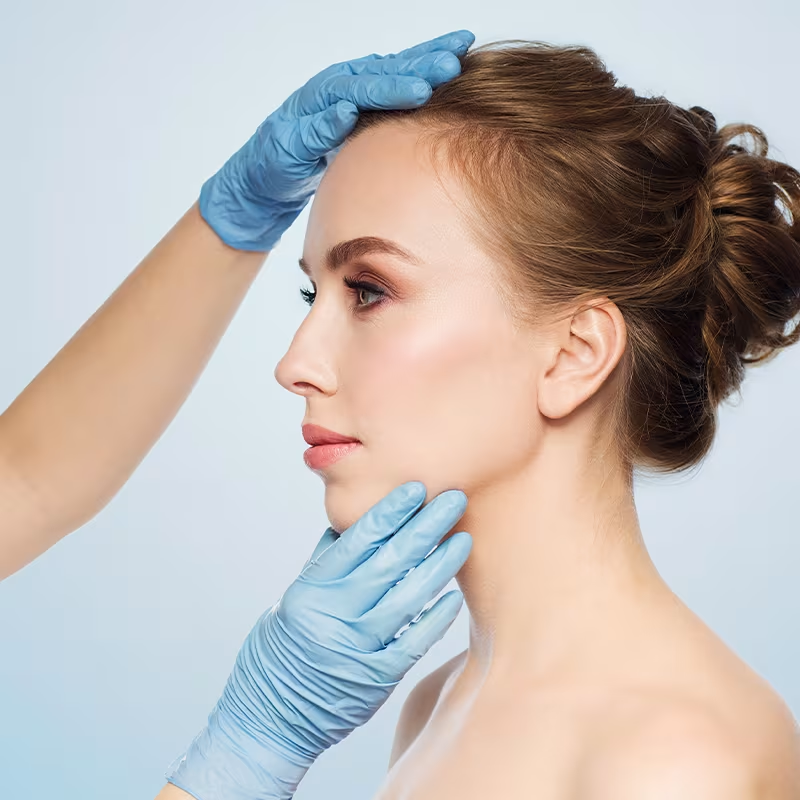
To be a candidate for secondary rhinoplasty, you need to have had at least one prior rhinoplasty surgery. Ideally, your nose should have had enough time to heal from the first surgery, and your final results should be visible. If your first nose job was only a couple of months ago, is better to wait a bit longer. Because it can take up to a year for the residual swelling to subside.
Candidates for revision rhinoplasty surgery might be unhappy with their noses for several different reasons. You might be a candidate for a second surgery if your nose was injured after your first surgery. If your surgeon wasn’t experienced and didn’t perform the surgery well. Or if your nose healed poorly, affecting the results of the surgery. Good candidates for a second nose job can have either cosmetic or functional concerns, including breathing issues.
Revision rhinoplasty candidates should be non-smokers in good overall health with realistic expectations for their results. Candidates can be of any ethnicity. Dr. Swartout is skilled in ethnic rhinoplasty. He can adapt his technique to account for differences in the nasal structure and skin. He will perform the procedure to help you achieve your individual goals.
What is the Revision Rhinoplasty Cost in Beverly Hills?
The cost of revision rhinoplasty can vary based on the complexity of the procedure and other considerations. It’s important to understand that secondary rhinoplasty is more complicated than a primary nose job and requires more expertise. The surgery usually comes at a higher price than primary rhinoplasty.
If you are concerned about the cost of your surgery, Dr. Swartout can sit down with you to review the price of the surgical procedure. You might qualify for financing to make the cost of surgery more manageable. If you need the surgery to correct breathing problems or an issue with your nose’s function, your health insurance might consider it a reconstructive surgery and offer some coverage.
How to Prepare for Revision Rhinoplasty
If you decide to move forward with revision rhinoplasty after your initial consultation, board-certified revision rhinoplasty surgeon Dr. Swartout will give you specific instructions to help you prepare for the surgery.
What you will need to do to get ready for the cosmetic procedure depends on your current lifestyle and health. If you are a current smoker, you’ll need to quit using any type of tobacco or nicotine products starting a few weeks before your surgery. You’ll need to abstain from tobacco use for several weeks after the surgery, too.
Some medications can interfere with the healing process after surgery or increase your risk of developing complications. Let Dr. Swartout know about any medicines you regularly take, even vitamins and minerals, as well as herbal supplements. He’ll let you know if you need to take a break from your supplements or if you should avoid taking certain medicines immediately before your surgery.
The night before surgery, start fasting around midnight or as instructed by your surgeon. You’ll most likely be receiving general anesthesia during the surgery, so you’ll need to avoid solid foods and caloric beverages. Plain water is fine to drink.
You’ll most likely need to prepare your home, family, and work to accommodate your recovery period. Either find someone to cover for you at work or put in a request for time off. Arrange to have a friend or relative drive you to and from our practice in Los Angeles. Stock up on ready-to-eat meals, movies and books, and pillows for your bed or couch.
Surgical Techniques Used by Revision Rhinoplasty Experts
1. Open vs. Closed Revision Rhinoplasty:
- Open Rhinoplasty: Involves a small incision on the columella (the tissue between the nostrils), allowing the surgeon to lift the skin and gain better visibility of the nasal structure. This technique is often preferred for complex revisions as it provides greater access and precision.
- Closed Rhinoplasty: All incisions are made within the nostrils, leaving no visible scars. This method is used for less complicated revisions and offers a faster recovery time.
2. Cartilage Grafts:
- Autologous Cartilage Grafts: Cartilage taken from the patient’s own body (usually the septum, ear, or rib) is used to rebuild and reinforce nasal structures. Rib grafts, in particular, are beneficial for significant structural support and reshaping.
- Synthetic Implants: In some cases, synthetic materials may be used to achieve the desired results, although autologous grafts are generally preferred to reduce the risk of rejection.
3. Osteotomies:
- Osteotomies involve making precise cuts in the nasal bones to reposition them and correct issues such as asymmetry or deviations. This technique helps in achieving a more balanced and symmetrical nasal appearance.
4. Soft Tissue Management:
- Excessive scar tissue from previous surgeries can complicate revision rhinoplasty. Surgeons carefully manage and sometimes remove this tissue to ensure better results and smoother contours.
What Happens During the Revision Rhinoplasty Surgery?
On the day of the surgery, you’ll be given general anesthesia, which will put you completely to sleep during the plastic surgery procedure. General anesthesia makes the surgery more comfortable for you.
After you’re asleep, Dr. Swartout will begin the surgery. Depending on the changes you request and the extent of the scar tissue from your first surgery, he might perform an open or closed rhinoplasty. During a closed rhinoplasty, all of the incisions are made inside your nose. During an open rhinoplasty, Dr. Swartout will make an incision externally, at the base of the nose, and between the nostrils. The incision is usually very small and leaves a barely-there scar.
The techniques Dr. Swartout will use during the surgery will depend on your goals. He might adjust the nasal bone, use cartilage grafts, or straighten a deviated septum. The goal of the surgery is usually to improve the appearance of your nose and enhance nasal function.
A secondary rhinoplasty might take between two and three hours to perform, depending on its complexity. Soon after the surgery is over and you’ve woken up from the anesthesia, you’ll be able to go home. A friend or relative should drive you home and stay with you overnight.
Revision Rhinoplasty Aftercare Instructions
The initial recovery after corrective rhinoplasty usually takes between one and two weeks. During this time, you need to avoid certain things and activities. You might be ready to go back to work, school, and other light activities after a week or so. But be sure to avoid strenuous activities for a few more weeks. Making changes to what you eat, wear, and do during the recovery period may be necessary. Here’s what you can expect:
Detailed Revision Rhinoplasty Patient Care Instructions
1. Pre-Surgery Preparations:
- Stop smoking at least two weeks before surgery to promote better healing.
- Avoid certain medications and supplements that can increase bleeding risk, such as aspirin, ibuprofen, and vitamin E.
2. Post-Surgery Care:
- Avoid strenuous activities and heavy lifting for at least six weeks.
- Follow a balanced diet and stay hydrated to support the healing process.
- Use prescribed medications and nasal sprays as directed to manage pain and prevent infection.
3. Long-Term Care:
- Protect your nose from trauma and avoid wearing glasses directly on the nasal bridge for several months.
- Maintain regular follow-up visits to track healing and address any concerns promptly.
Revision Rhinoplasty Recovery Timeline
Day of Revision Rhinoplasty |
|
The first week after Revision Rhinoplasty |
|
7 to 14 days after Revision Rhinoplasty |
|
30 days after Revision Rhinoplasty |
|
3 months after Revision Rhinoplasty |
|
1 year after Revision Rhinoplasty |
|
Why Choose Dr. Swartout
for Your Revision Rhinoplasty
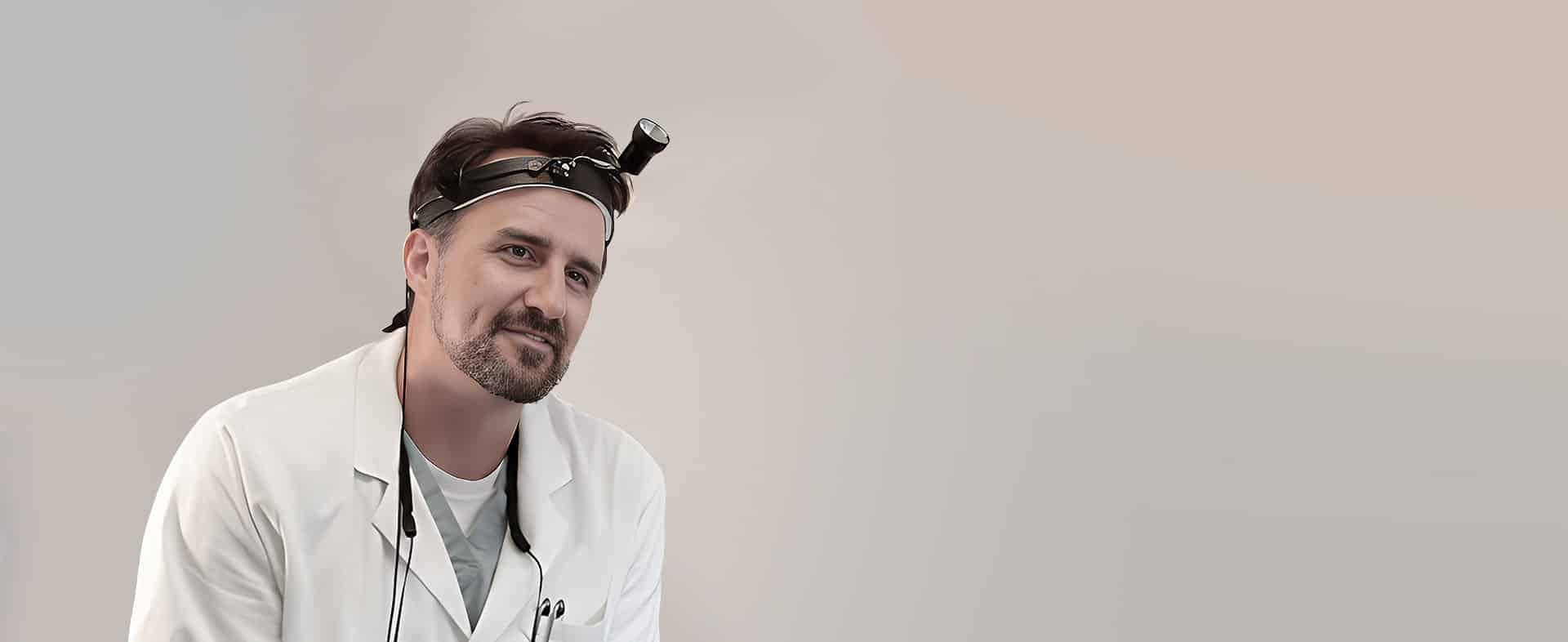
- Fellowship trained sub-specialist in Facial Plastic surgery who attended college at Harvard University.
- Attended medical school at Albert Einstein College of Medicine in New York.
- Interned in general surgery at New York University, followed by a specialty residency in Otolaryngology – Head & Neck surgery at New York University.
- Completed a fellowship in Facial Plastic & Reconstructive Surgery at the University of Illinois at Chicago where he worked with Dr. Dean Toriumi.
- A member of the American Academy of Facial Plastic & Reconstructive Surgery, the American Academy of Otolaryngology – Head & Neck Surgery and the American Rhinologic Society.
- Teaches nasal surgery to residents at Harbor UCLA both to contribute to the education of future doctors and to give back to an underserved community.