All surgery carries some degree of risk — and understanding reconstructive surgery risks is an important part of preparing for facial reconstruction. But for patients dealing with the aftermath of trauma, skin cancer removal, burns, or a congenital condition, the benefits of reconstruction consistently outweigh those risks. Understanding what to expect, how complications are managed, and what role your surgeon plays in minimizing them can help you approach the process with confidence.
Dr. Benjamin G. Swartout is a fellowship-trained facial plastic surgeon based in Beverly Hills, with specialized training in both reconstructive and cosmetic facial surgery. His approach to every procedure starts with a thorough consultation — one that covers not just the surgical plan, but an honest discussion of risks, recovery, and realistic outcomes. Patients throughout Los Angeles come to his practice knowing they’re in experienced, capable hands.

What Patients Should Know Before Surgery
Before discussing specific risks, it helps to understand what reconstructive plastic surgery is actually doing. Unlike elective cosmetic procedures, reconstructive surgery focuses on restoring the form and function of the face after trauma, cancer removal, burns, or birth defects. Because these procedures address conditions that affect both appearance and how the face works, the surgical challenges can be more complex than those in elective surgery. That complexity is precisely why surgeon selection matters so much.
Here’s what every patient should know before moving forward:
- All plastic surgery carries general risks, but most can be minimized with proper preparation and an experienced surgeon.
- Reconstructive surgery may involve additional procedure-specific complications depending on the type of repair needed.
- Factors like smoking, prior surgery, and working with a non-specialist can increase the likelihood of complications.
- Many post-surgical side effects are temporary and resolve with appropriate care and follow-up.
- For most patients, the functional and emotional benefits of facial reconstructive surgery far outweigh the risks.
Common Surgical Risks in Plastic Surgery
Certain risks apply to any surgical procedure. Patients should be aware of the following before undergoing facial reconstructive surgery:
- Infection can develop at the incision site or in deeper tissue layers, particularly in cases where the skin’s natural barrier has already been compromised. Most infections are treatable with antibiotics, but more serious cases may require additional intervention.
- Bleeding and hematoma — a collection of blood beneath the skin — can occur in the days following surgery. Hematomas may need to be drained if they don’t resolve on their own.
- Scarring and skin irregularities are inherent to any incision-based procedure. Experienced surgeons use careful technique and precise closure to minimize visible scarring, but healing outcomes vary by patient, skin type, and the location of the repair.
- Anesthesia-related risks include adverse reactions and nausea, and in rare cases, more serious complications. These are managed by an anesthesiology team and are generally low in otherwise healthy patients.
- Poor wound healing is more likely in patients with certain health conditions or compromised circulation. Following post-operative care instructions closely reduces this risk significantly.
In rare cases, more serious outcomes such as tissue necrosis or nerve damage can occur. These are uncommon but worth discussing openly during the consultation process.
Possible Complications by Reconstructive Plastic Surgery Type
Different types of reconstructive surgery address different conditions, and each comes with its own set of considerations:

- Burn reconstruction reduces scar tissue and restores skin function, though it may require multiple stages as new contracture scars can form during healing.
- Mohs reconstruction repairs facial defects left after skin cancer removal using skin grafts or flap surgery, which carry a small risk of graft compromise or asymmetry.
- Ear reconstruction rebuilds the ear’s natural shape after trauma or congenital absence, though as with natural ears, perfect symmetry between the two sides is not always achievable.
- Lip reconstruction restores both appearance and function after injury or cancer surgery, with the primary consideration being preservation of movement and sensation.
- Facial trauma repair addresses broken bones, lacerations, and soft tissue loss, with the possibility of revision surgery if structures heal suboptimally.
- Flap surgery and local tissue repair carry a small risk related to blood supply, which careful surgical planning keeps low.
Reconstructive Surgery by the Numbers
Reconstructive surgery is far more common than many people realize. According to the American Society of Plastic Surgeons, more than 1 million reconstructive procedures were performed in the United States in 2024 — a 2% increase over 2023. Tumor removal, including skin cancer, was the most common procedure at nearly 362,000 cases. Head and neck reconstruction, burn care, scar revision, and cleft lip and palate repair were also among the procedures tallied. These numbers reflect how many patients each year turn to reconstructive plastic surgery to restore function and appearance after illness, injury, or a congenital condition.
What Increases the Risk of Complications
Certain patient factors can raise the likelihood of surgical complications. Being informed about these helps patients take an active role in their own safety.
- Smoking significantly impairs circulation and oxygen delivery to healing tissue, raising the risk of skin necrosis, poor wound closure, and infection. Most surgeons require patients to stop smoking well in advance of any surgical procedure.
- Prior surgery or significant facial trauma can alter tissue quality, blood supply, and anatomical landmarks, making reconstruction more technically demanding.
- Choosing a non-specialist is among the most preventable risk factors. Facial reconstructive surgery requires specific training that not all plastic surgeons possess. Working with a surgeon who lacks subspecialty training increases the risk of suboptimal outcomes and the likelihood of needing revision surgery.
- Overall health status, including conditions such as diabetes, can affect healing and infection risk. Pre-operative preparation and appropriate medical clearance help identify and manage these factors in advance.

Secure Your Safe Procedure Experience with Dr. Swartout
Join our satisfied clients who’ve experienced safe, effective treatments.
How an Experienced Facial Plastic Surgeon Improves Safety and Care
Surgeon selection is the single most controllable variable in patient safety. Dr. Swartout completed his fellowship in facial plastic and reconstructive surgery under Dr. Dean Toriumi at the University of Illinois at Chicago — one of the most respected training programs in the field. His residency in otolaryngology and head and neck surgery provides a precise, anatomically grounded foundation that is directly relevant to reconstructive facial work.
Every case at his Beverly Hills practice begins with a detailed consultation. Dr. Swartout reviews medical history, assesses the extent of the repair needed, and develops a highly individualized surgical plan. His pre-operative process is designed to identify risk factors early, optimize patient health before surgery, and ensure that patients have a clear picture of what to expect throughout recovery.
What to Expect During Recovery
Recovery from reconstructive surgery varies depending on the type and complexity of the procedure. Some outpatient repairs require only a few days of downtime, while more involved reconstructions may require a longer healing period with staged follow-up visits.
Several side effects are expected and temporary:
- Swelling and bruising typically peak in the first few days and gradually resolve over weeks to months.
- Temporary numbness or changes in sensation near incision sites are common and usually improve as nerves regenerate.
- Mild discomfort is manageable with prescribed pain care and generally subsides within the first week.
Following post-operative care instructions — including activity restrictions, wound care, and follow-up appointments — is one of the most important things a patient can do to support healing and reduce the risk of complications. Regular check-ins with Dr. Swartout allow the team to monitor progress and address any concerns early.
When to Contact Your Surgeon
Most post-surgical experiences follow a predictable course, but certain signs warrant prompt attention. Patients should contact the office if they notice:
- Increasing redness, warmth, or swelling at the surgical site after the initial healing period
- Unusual discharge or changes at incision sites
- Fever
- Sudden or worsening changes in sensation or movement
- Any symptom that feels unexpected or is not improving
Early communication prevents small concerns from becoming larger problems. Dr. Swartout’s team is accessible throughout recovery and encourages patients to reach out with any questions.
Is Facial Reconstructive Surgery Worth the Risk?
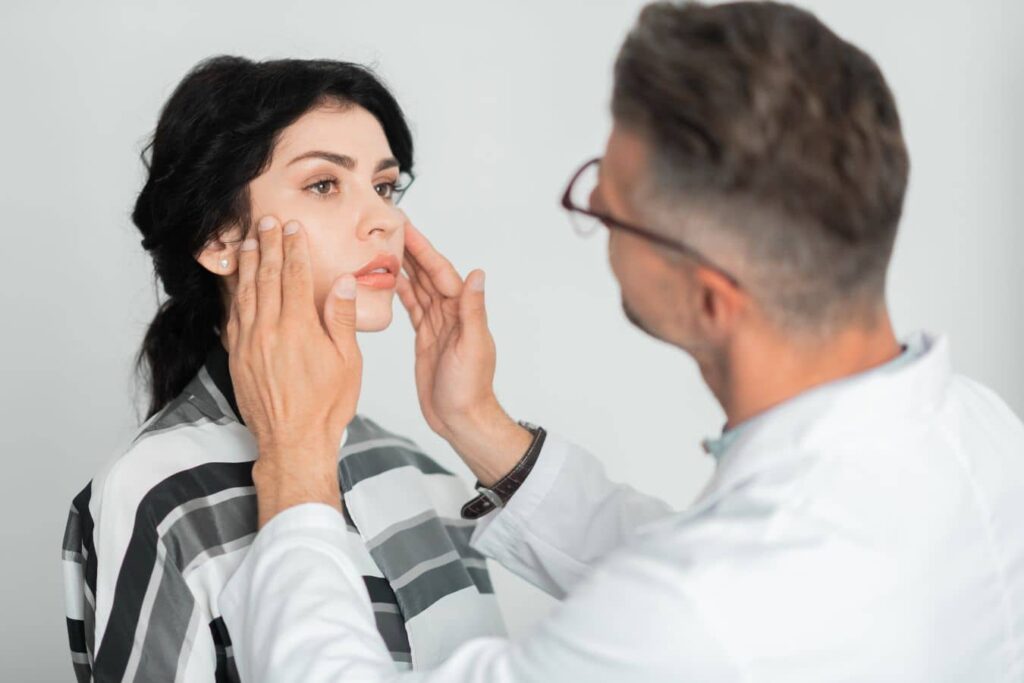
For the patients who need it, this question often answers itself. Reconstructive procedures address conditions that affect not just appearance, but breathing, speaking, eating, movement, and emotional well-being. A patient with a facial defect following Mohs surgery, a burn, or significant trauma is already living with a compromised outcome — reconstruction is the path back to function and normalcy.
The risks outlined here are real, but they are manageable. With proper pre-operative preparation, a qualified surgeon with subspecialty facial training, and attentive post-operative care, the vast majority of patients achieve outcomes that meaningfully improve their quality of life. The goal of every consultation at Dr. Swartout’s Beverly Hills practice is to give patients a complete, honest picture of both sides — so they can move forward with confidence.
Schedule a Consultation in Beverly Hills, CA
If you’re considering facial reconstructive surgery or have questions about whether a procedure is right for your situation, Dr. Swartout’s Beverly Hills practice is here to help. Serving patients throughout Los Angeles and the surrounding area, he provides expert, personalized care for patients navigating reconstruction after trauma, cancer, or congenital conditions. Contact the office to schedule a consultation.
Frequently Asked Questions About Facial Reconstructive Surgery
About Dr. Benjamin G. Swartout
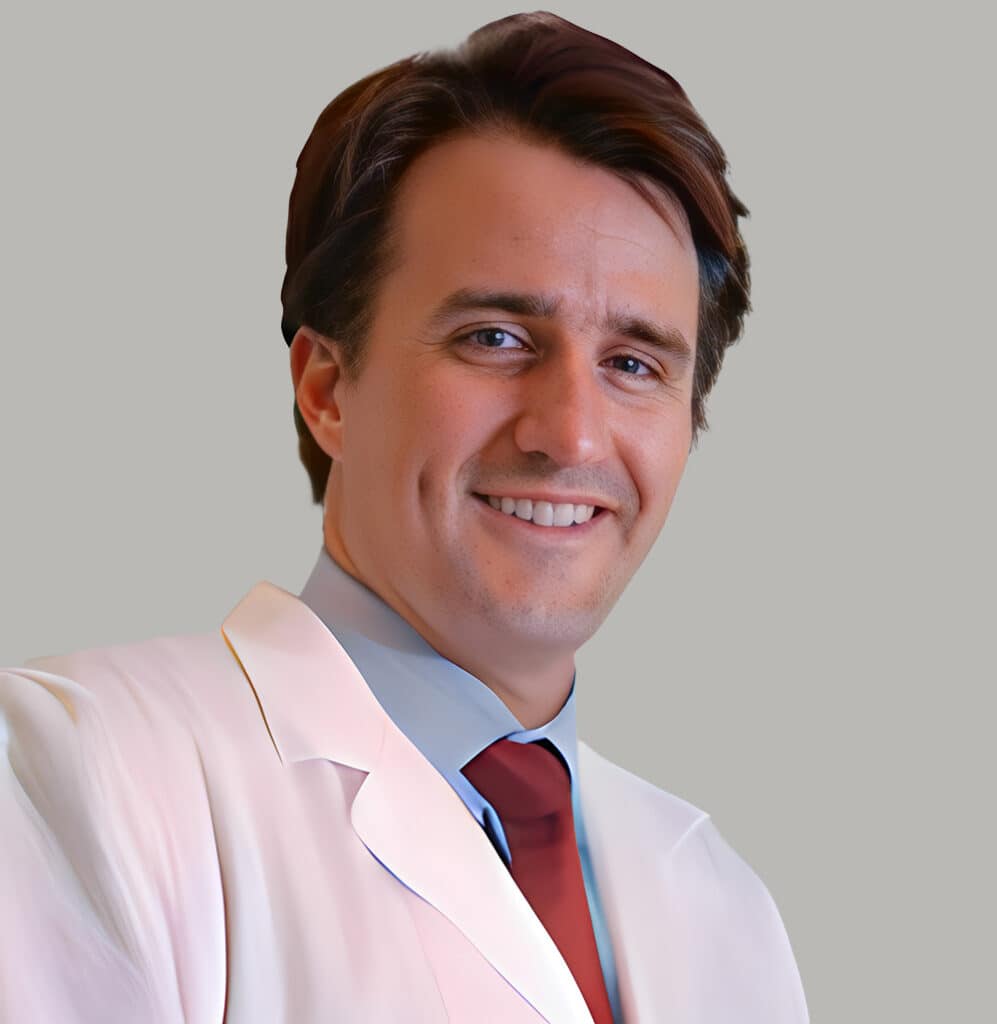
Dr. Benjamin G. Swartout is a fellowship-trained facial plastic surgeon based in Beverly Hills, California. He completed his undergraduate education at Harvard University and earned his medical degree from Albert Einstein College of Medicine. After his residency in otolaryngology and head and neck surgery at New York University, he completed a fellowship in facial plastic and reconstructive surgery under Dr. Dean Toriumi at the University of Illinois at Chicago. Dr. Swartout is a member of the American Academy of Facial Plastic and Reconstructive Surgery and the American Academy of Otolaryngology. He teaches nasal surgery to residents at Harbor UCLA and has published numerous articles and book chapters on facial surgery. His Beverly Hills practice focuses exclusively on facial procedures, with particular expertise in reconstructive surgery, rhinoplasty, and revision rhinoplasty.