Most patients are advised to wait at least 12 months after their first rhinoplasty before undergoing elective revision rhinoplasty. This gives swelling time to decrease and scar tissue time to mature, allowing the surgeon to better assess the nose’s appearance and function. However, 12 months is a general guideline rather than a guarantee of complete healing, and some patients may need longer.
You don’t have to wait a full year to consult a revision rhinoplasty specialist. An earlier evaluation can help determine whether your concerns are part of normal healing or may require future correction. The appropriate timing depends on factors such as remaining swelling, nasal support, breathing function, and the extent of the proposed revision.

Key Takeaways
- Most elective revision rhinoplasty procedures are considered after at least 12 months of healing.
- Swelling and scar tissue can continue changing over time, so some patients may need to wait longer.
- You can consult a revision rhinoplasty specialist before 12 months to discuss concerns and monitor healing.
- Earlier revision surgery may be appropriate in selected cases, but the decision requires careful medical evaluation.
- Persistent breathing problems or worsening postoperative symptoms should be assessed rather than ignored until the one-year mark.
General Healing Timeline After Primary Rhinoplasty
Recovery after rhinoplasty is gradual, and the nose may continue changing for a year or longer. The following timeline provides general guidance rather than a fixed schedule for revision surgery.
| Time After Surgery | What’s Happening | Revision Considerations |
| 1–2 weeks | Swelling and bruising are common as early healing progresses. | Too early for routine elective revision; contact your surgeon about concerning symptoms. |
| 1 month | Visible swelling often decreases, but internal healing continues. | The final shape cannot yet be reliably assessed. |
| 3–6 months | Nasal contours become more defined, although swelling and scar tissue continue changing. | A specialist consultation may help evaluate concerns, but elective revision is generally deferred. |
| 9 months | The nasal shape may be more stable, although residual swelling can remain. | Evaluation and preliminary planning may be appropriate; surgery is not automatically recommended. |
| 12+ months | The result is often sufficiently established for a more reliable assessment. | Elective revision may be considered if healing, anatomy, and the proposed procedure support it. |
Individual recovery varies. Some patients, particularly those with persistent swelling or complex surgical histories, may need additional healing time before revision surgery.
Common Reasons People Want a Revision

Patients may consider revision rhinoplasty when concerns about nasal appearance or breathing persist after their initial surgery. Common reasons include:
- Persistent nasal asymmetry
- Nasal obstruction or breathing difficulties
- Noticeable scar-related irregularities
- A drooping or poorly supported nasal tip
- A nasal shape that appears overly narrow or wide
Some concerns improve as swelling subsides, while others may require further evaluation. A revision specialist can help determine whether additional treatment is appropriate.
Why Waiting Before Revision Rhinoplasty Matters
Swelling, scar tissue, and nasal contours continue changing after rhinoplasty. Operating before these changes have stabilized can make it harder to distinguish lasting concerns from changes that may improve naturally.
A 2021 clinical review of revision rhinoplasty recommends waiting at least one year in most cases, particularly when significant soft-tissue dissection is needed. Some patients require longer, while selected limited corrections may be considered earlier following specialist evaluation.
The goal of waiting is to allow a more reliable assessment and surgical plan, not simply to reach a specific number of months.

Secure Your Safe Procedure Experience with Dr. Swartout
Join our satisfied clients who’ve experienced safe, effective treatments.
Signs Your Nose Might Be Ready for a Revision
Deciding whether revision rhinoplasty is appropriate requires more than counting the months since your first surgery. A revision specialist may consider:
- Nasal shape: Whether the contour has become relatively stable or is still changing.
- Remaining swelling: Whether swelling could be affecting the appearance of the nose.
- Scar tissue and nasal support: Whether the tissues have matured sufficiently for the proposed procedure.
- Breathing function: Whether persistent obstruction may be related to a structural problem or another treatable condition.
- Surgical history and goals: What was changed during the first operation and whether the remaining concerns can realistically be improved.

A consultation can take place before 12 months, even when surgery is not yet advisable.
If you develop worsening pain, fever, increasing redness, concerning drainage, or persistent or worsening nasal obstruction, contact your surgeon rather than waiting for a routine revision consultation. Severe breathing difficulty or uncontrolled bleeding requires emergency medical attention.
Can Revision Rhinoplasty Really Fix the Problem?
Revision rhinoplasty may improve persistent cosmetic or functional concerns after an earlier nose surgery. Depending on the anatomy, treatment may involve correcting nasal tip irregularities, restoring structural support, or addressing breathing difficulties. Some cases require cartilage grafting or reconstruction of previously altered nasal structures.
However, the success of revision rhinoplasty depends on factors such as existing scar tissue, changes to the nasal framework, and the availability of cartilage. Not every concern can be completely corrected, and results cannot be guaranteed. A specialist can explain the potential benefits, risks, and realistic goals for each patient.
Frequently Asked Questions About Revision Rhinoplasty
Discuss Revision Rhinoplasty Timing with Dr. Swartout
If you’re considering a second nose surgery, Dr. Benjamin Swartout can evaluate your healing, nasal structure, and breathing concerns to help determine whether revision rhinoplasty may be appropriate.
You can schedule a consultation even if you haven’t reached the 12-month mark. To discuss your concerns, contact Dr. Swartout’s office in Beverly Hills.
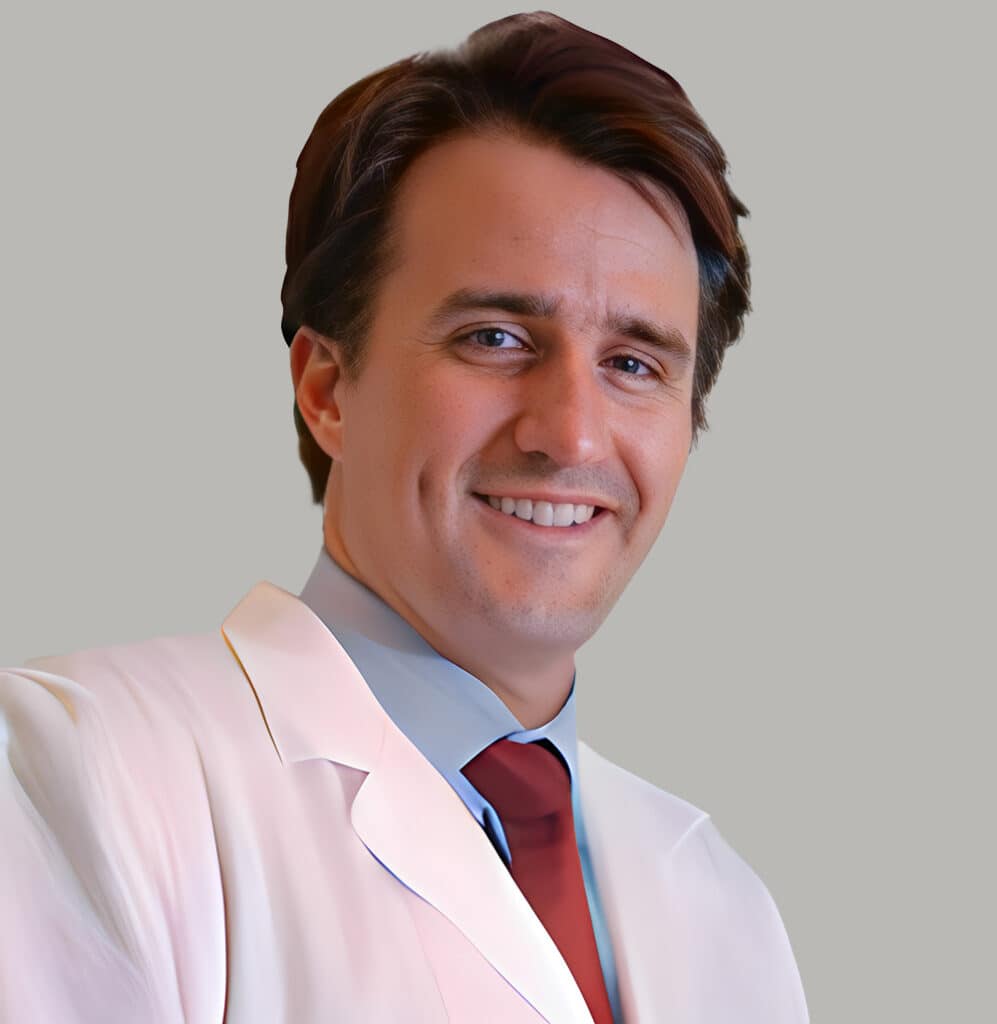
Dr. Benjamin G. Swartout is a fellowship-trained facial plastic surgeon in Beverly Hills with a special focus on rhinoplasty, revision rhinoplasty, and functional nasal surgery. His approach emphasizes natural-looking, long-lasting results while preserving or improving nasal breathing.
Dr. Swartout’s credentials include:
- Fellowship Training — Facial Plastic & Reconstructive Surgery, University of Illinois at Chicago under Dr. Dean Toriumi
- Residency — Otolaryngology–Head & Neck Surgery, New York University
- Medical Degree — Albert Einstein College of Medicine
- Undergraduate Education — Harvard University
- Published Author — Numerous articles and book chapters on rhinoplasty and aesthetic facial surgery
- Medical Educator — Teaches nasal surgery to residents at Harbor-UCLA Medical Center
Expertise Areas:
Rhinoplasty, Revision Rhinoplasty, Ethnic Rhinoplasty, Facial Plastic and Reconstructive Surgery, Nasal Function, and Complex Nasal Surgery.